Teachers don’t want to police bathrooms. They want clarity.
This article explores why classroom toilet breaks are a more complex issue than they first appear. It highlights the need for schools to balance student dignity and genuine need with safety, learning time, supervision, and trust.

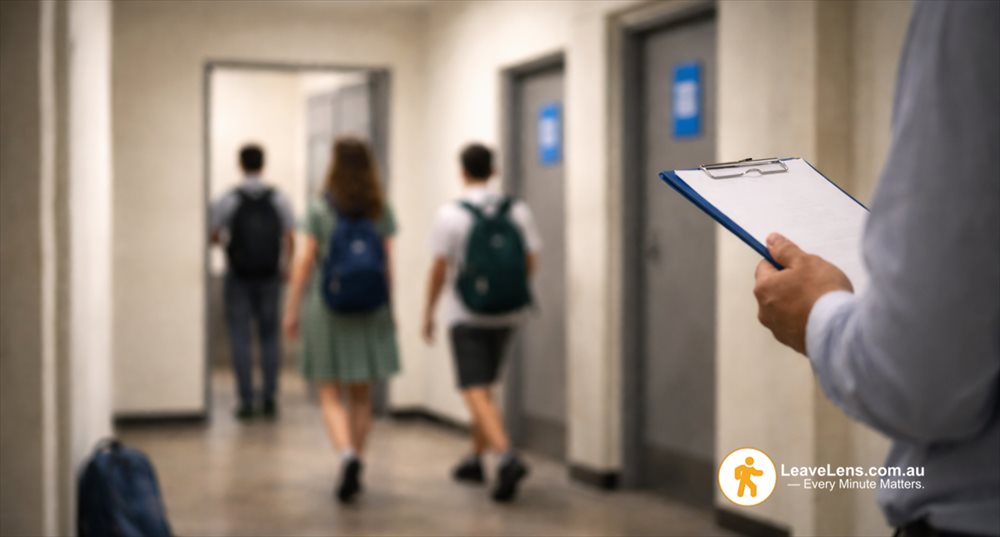
If you ask most teachers whether they want to become the bathroom police, the answer is obvious. Of course not.
They do not enter teaching because they want to argue over toilet timing, sign passes, track who is out, decide who is genuine, or work out whether a student is asking to leave class because they truly need to go, want to vape, want to avoid work, want to socialise, or simply want out. But that is exactly where many schools have ended up. In recent Reddit (r/AustralianTeachers) discussions, teachers describe class-time toilet access as a duty-of-care problem as much as a behaviour problem, especially when unsupervised spaces become associated with vaping, bullying, fighting, vandalism and roaming.
That matters, because the public conversation often frames this issue too narrowly.
The debate gets reduced to a false choice: either schools trust students completely, or schools become harsh and controlling. However, that is not what the real problem looks like inside a school. The real problem is that schools are being asked to manage a growing amount of out-of-class time with very little clarity. Teachers are left making judgement calls in the moment, often with incomplete information, while leadership tries to respond to patterns they cannot easily see. The result is friction for everyone.
And when schools do not have clarity, they improvise.
That is why the fixes appearing in schools are becoming increasingly visible. Recent Australian reporting has described schools trialling parent alerts when a child uses the bathroom during class, CCTV covering bathroom entry and exit points, sign-out systems, teacher-issued passes, and even “toilet diary” style logging to track repeated class exits. Whether you agree with those measures or not, they all point to the same underlying truth: schools are not really trying to manage toilets. They are trying to manage a visibility gap.
That visibility gap is being driven by real pressure.
Vaping remains a serious school issue, even with recent regulatory changes. The Australian Institute of Health and Welfare reported that in 2022-2023, lifetime e-cigarette use among 18 to 24 year olds had reached 49 per cent, almost double the 2019 level. In Queensland, the Chief Health Officer’s report says that in 2022-2023, 35.6 per cent of high school students aged 12 to 17 had ever used an e-cigarette and 21.3 per cent had vaped in the previous month. Those figures do not prove every bathroom exit is suspicious, but they explain why schools feel pressure around unsupervised spaces during class time.
That pressure has already changed school behaviour.
ABC reported in 2023 that some Australian schools were installing vape detectors in bathrooms because they were so concerned about student use. In another ABC report, one Queensland school abandoned an automatic suspension approach after 52 students were suspended and students began flushing vapes down toilets, causing major plumbing problems. When the only tools schools have are blunt or reactive, the response can become disruptive, expensive, and unsustainable.
This is where the conversation needs to become more precise.
The core issue is not that schools want to monitor bathroom use for the sake of it. The core issue is that schools want enough clarity to answer very practical questions:
- Who is out of class?
- For how long?
- How often?
- At what times?
- Is this becoming a pattern?
- Is this linked to a location, lesson, year level, or wellbeing concern?
When schools cannot answer those questions, teachers become the system. They become the gatekeeper, the memory bank, the detective, the referee and the risk manager. That is a poor use of professional time, and it is one reason these debates feel so emotionally charged.
The genuine tension here is real.
There are students with legitimate medical needs. There are students managing menstruation, anxiety, digestive conditions, disability, or simply bad timing. There are also students who learn quickly that “Can I go to the toilet?” can be one of the easiest exits from difficult work or uncomfortable moments. Good schools are trying to protect the first group without giving up on the second. That is not a compassion-versus-control problem. It is a clarity problem.
And when clarity is missing, the burden shows up elsewhere.
It shows up in lost learning time, because repeated short exits fracture direct instruction and independent work. It shows up in supervision risk, because too many students out at once creates exactly the kind of unsupervised environment teachers on Reddit's r/AustralianTeachers describe as unsafe. It shows up in parent communication, because schools end up having to explain why they tightened rules at all. And it shows up in public backlash, because once the only visible response is CCTV, diaries, or stricter toilet access, the conversation becomes about privacy rather than the operational pressures that created the policy in the first place.
That is why the most useful question for schools is not: Should we be strict or relaxed about bathroom access? It should be: How do we give staff enough clarity that they do not have to keep improvising?
Because teachers do not want to police bathrooms. They want a fairer, more consistent, less disruptive way to understand what is happening when students leave class, and once you frame the issue that way, a lot of the noise falls away. This stops being a debate about whether students should be allowed to use the toilet. It becomes a discussion about whether schools can manage out-of-class time with enough visibility to protect student dignity, reduce lost learning time, and respond to patterns before the only options left are punitive or controversial ones.
Schools that can create clarity will put less pressure on teachers, make expectations fairer for students, and make it easier to respond to genuine concerns without turning every class-time exit into a judgement call.
About LeaveLens
LeaveLens was developed from a real classroom experience, after repeated student exits revealed a pattern that was not visible to any one teacher alone. It helps schools quickly capture student exit and entry times with minimal lesson disruption, building a clearer picture of lost learning time across classes, cohorts and the whole school. By focusing on time out of class rather than excuses, LeaveLens gives educators and school leaders meaningful data to support earlier, better-informed conversations with students and parents.
Referenced discussions and reporting
This article draws on:
- Reddit r/AustralianTeachers discussions on toilet access, duty of care, vaping, bullying, vandalism and class-time restrictions. https://www.reddit.com/r/AustralianTeachers/comments/1rsmmck/is_it_illegal_to_to_deny_students_going_to_the
- ABC reporting on vape detectors in school bathrooms and the limits of punitive vaping responses. https://www.abc.net.au/news/2023-03-02/schools-tackle-vaping-by-installing-detectors-in-bathrooms/102041598
- Australian vaping data from AIHW and Queensland’s Chief Health Officer reporting. https://www.aihw.gov.au/reports/smoking/young-peoples-vapes-e-cigarettes
- Recent reporting on schools using CCTV at bathroom entry points, parent alerts, and bathroom logging systems. https://www.brisbanetimes.com.au/politics/nsw/cctv-texts-to-parents-how-one-sydney-private-school-is-tracking-students-toilet-use-20260304-p5o7d2.html