When Toilet Breaks Become a Human Rights Argument, Teachers Are Already Losing
This article explores how class-time toilet requests can quickly become a difficult human rights and duty-of-care issue for teachers. It argues that the pressure should not sit with one classroom teacher making a judgement in one moment, especially when repeated exits may involve genuine needs, avoidance, lost learning time, parent concerns or wider supervision issues. The article explains why schools need to shift from debating individual permission to understanding whole-school patterns, while

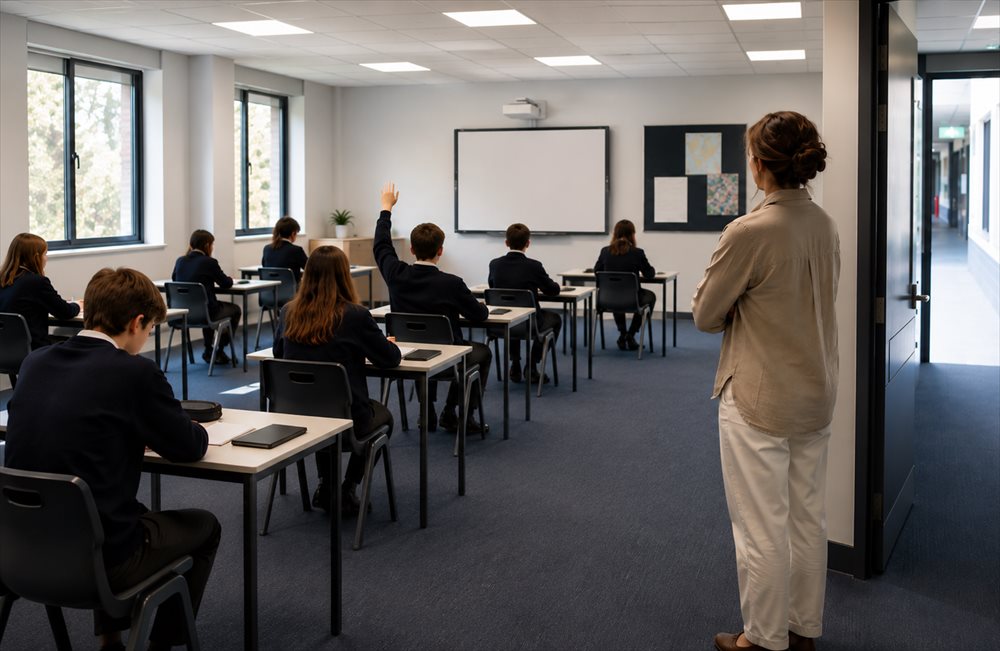
My experience with class-time toilet requests has never been as simple as deciding whether a student should be allowed to leave the room.
As a teacher, I have stood in front of classes trying to make that decision in real time, while also knowing that the decision can be interpreted very differently afterwards. In the moment, I might be thinking about the timing of the lesson, whether another student is already out, whether the request feels genuine, whether this has happened before, and whether the student is avoiding work, anxious, unwell, or simply needing a break.
But I have also learnt that some students can be deceptive, defensive, and very convincing when challenged, particularly when they know the conversation may later involve parents. That is not said to dismiss genuine need. It is said because teachers live in that uncomfortable space every day. We are expected to protect student dignity and human rights, while also managing lost learning time, supervision, behaviour, and the reality that not every request is made in good faith.
That is the tension I wanted to solve when I built LeaveLens.
I did not want teachers standing in front of a class feeling like they had to personally judge every request, defend every decision, and somehow remember every pattern across the week. I wanted a way for schools to see the bigger picture without asking students to disclose private or sensitive reasons for leaving the room.
Because when a toilet break becomes a human rights argument, the classroom teacher is already losing.
Not because human rights do not matter. They absolutely do. Students should have dignity, reasonable access to toilets, privacy, and care. The problem is that when every individual decision is framed around one teacher saying yes or no in one lesson, the wider pattern disappears and the teacher becomes the battleground.
Research into school toilet access has highlighted that children’s toileting needs can be genuine, individual and significant, and that access to school bathrooms can affect student health and wellbeing: https://bera-journals.onlinelibrary.wiley.com/doi/10.1002/berj.4198
At the same time, schools are not responding to nothing. Many schools are trying to manage real operational and duty-of-care concerns, including lost learning time, repeated disruption, vandalism, vaping, student meet-ups, supervision gaps and unsafe behaviour in unsupervised spaces.
Recent Australian reporting shows how charged this issue has become. News.com.au has reported on schools introducing sign-in and sign-out systems, toilet diaries and other bathroom monitoring practices in response to excessive class-time toilet use, with concerns raised about privacy, medical needs, fairness and disruption: https://www.news.com.au/national/nsw-act/news/australian-schools-introduce-signout-systems-to-monitor-student-toilet-breaks/news-story/67cea904857c79eb28a432e2a645b655
Another report described a Sydney school trial where CCTV was positioned near bathroom areas and parents were notified when students used the toilet during class. The school linked the measure to repeated vandalism and unsupervised movement, while critics questioned whether the response went too far: https://www.news.com.au/lifestyle/parenting/school-life/sydney-school-tracking-students-bathroom-use/news-story/a6a4ac500bbde5f71d9f11415cba3286
The ABC has also reported on school toilet policies where concerns around vaping, vandalism and bathroom access became points of tension between students, parents and school leadership: https://www.abc.net.au/news/2023-02-21/taminmin-college-toilet-policy-vaping-vandalism-darwin/100751434
What these examples show is that the toilet break debate is not really just about toilets. It is about how schools balance student dignity, health needs, learning time, privacy, supervision, behaviour management and duty of care.
When schools respond too bluntly, the conversation can quickly become adversarial. Parents may hear that their child was denied access to the toilet. Teachers may feel they were trying to manage a repeated pattern. Leadership may be responding to whole-school concerns about safety or lost learning time. Students may feel watched, mistrusted or embarrassed. Each of those perspectives can contain some truth.
That is why this issue needs more care than a simple rule.
A blanket “no” is not good enough. A blanket “yes” is not always workable either. Asking every teacher to personally judge every request without wider context is not fair, because the teacher standing in front of the class usually does not have the whole picture.
They may know that a student asked to leave yesterday. They may not know the same student has asked to leave in several other subjects that week. They may know the student is unsettled today. They may not know whether this has become a pattern across the timetable. They may suspect avoidance, but not know whether there is a medical or wellbeing issue sitting underneath it.
And yet, in that moment, the teacher is expected to decide.
This is where schools need to shift the conversation away from individual permission and towards whole-school patterns.
The better question is not simply:
Should this teacher have said yes or no in this one lesson?
The better question is:
What is happening across the week, across all subjects, and across the whole school?
One five-minute exit may be nothing. Several exits across a week may be something worth understanding. Repeated exits across multiple subjects may point to lost learning time, wellbeing concerns, avoidance, peer patterns or supervision issues. A student regularly leaving during explicit instruction may be missing the most important part of the lesson. A student frequently leaving at the same time as the same peers may raise a completely different duty-of-care concern.
A single classroom teacher cannot see all of that from one room.
That is the key problem.
When a school only focuses on the moment, the teacher becomes the battleground. When a school can see the pattern, the conversation becomes calmer, fairer and more useful.
Instead of a parent conversation beginning with, “Why did this teacher not let my child go to the toilet?”, the conversation can become:
“Across the past fortnight, your child has left class 14 times and missed 96 minutes of learning. We are not here to debate one lesson. We are trying to understand whether there is a wellbeing need, a medical issue, a learning concern, or a pattern of avoidance that we need to support.”
That is a completely different conversation.
It protects the teacher from carrying the whole issue alone. It protects the student from being judged only on one incident. It gives parents something clearer than a fragment of a story. It also gives leadership, year-level coordinators and wellbeing teams a better basis for support, intervention or follow-up.
This is also where privacy matters.
Schools do not always need to record the reason a student leaves class. In many cases, the reason may be sensitive. It may involve health, anxiety, menstruation, disability, family issues or something else the student should not have to disclose publicly.
But the time still matters.
The frequency still matters. The learning time still matters. The duty of care still matters.
That is why LeaveLens is built around logging time out and time back in, rather than asking teachers to record the reason a student leaves. The reason may be private, complicated or sensitive. The measurable issue for schools is how often students are leaving, how long they are gone, what learning time is being missed, and whether a pattern is emerging across subjects or cohorts.
For me, this came from a real teaching problem. I did not want to be standing in front of a class trying to personally judge every request, especially knowing that some students had genuine needs and others were using the request to avoid work or leave the room repeatedly. I also knew that when parents were contacted, the conversation could become defensive very quickly if it was based only on one teacher’s judgement or one isolated incident.
Data changes that conversation.
It does not remove the need for professional judgement, but it supports it. It allows the school to say, “This is not about one teacher or one lesson. This is the pattern we are seeing, and this is the learning time being missed.”
That is a more reasonable place to start.
When toilet breaks become a human rights argument, teachers are already losing because the focus has moved away from the system and onto the individual teacher. The goal should not be to dismiss student rights, privacy or dignity. Those things matter. The goal should be to build school processes that respect those rights while still helping staff understand repeated time out of class, identify patterns early and respond in a way that is fair to students, teachers and families.
Teachers should not be expected to act as the judge, memory bank, data collector, wellbeing officer, parent liaison and behaviour system every time a student asks to leave the room.
They should be able to manage the immediate moment with care, while the school has the tools to understand the wider pattern.
References
News.com.au reporting on Australian schools introducing sign-out systems and toilet diaries: https://www.news.com.au/national/nsw-act/news/australian-schools-introduce-signout-systems-to-monitor-student-toilet-breaks/news-story/67cea904857c79eb28a432e2a645b655
News.com.au reporting on a Sydney school tracking student bathroom use: https://www.news.com.au/lifestyle/parenting/school-life/sydney-school-tracking-students-bathroom-use/news-story/a6a4ac500bbde5f71d9f11415cba3286
ABC reporting on a Darwin school toilet policy, vaping, vandalism and bathroom access concerns: https://www.abc.net.au/news/2023-02-21/taminmin-college-toilet-policy-vaping-vandalism-darwin/100751434
Research article on school toilet access and the experiences of pupils, parents and teachers: https://bera-journals.onlinelibrary.wiley.com/doi/10.1002/berj.4198